I Believe Altman and Amodei. That's Why I'm Worried.
If the builders of AI are right about its risks, the institutions that prepare us to live with it are the least ready of all.
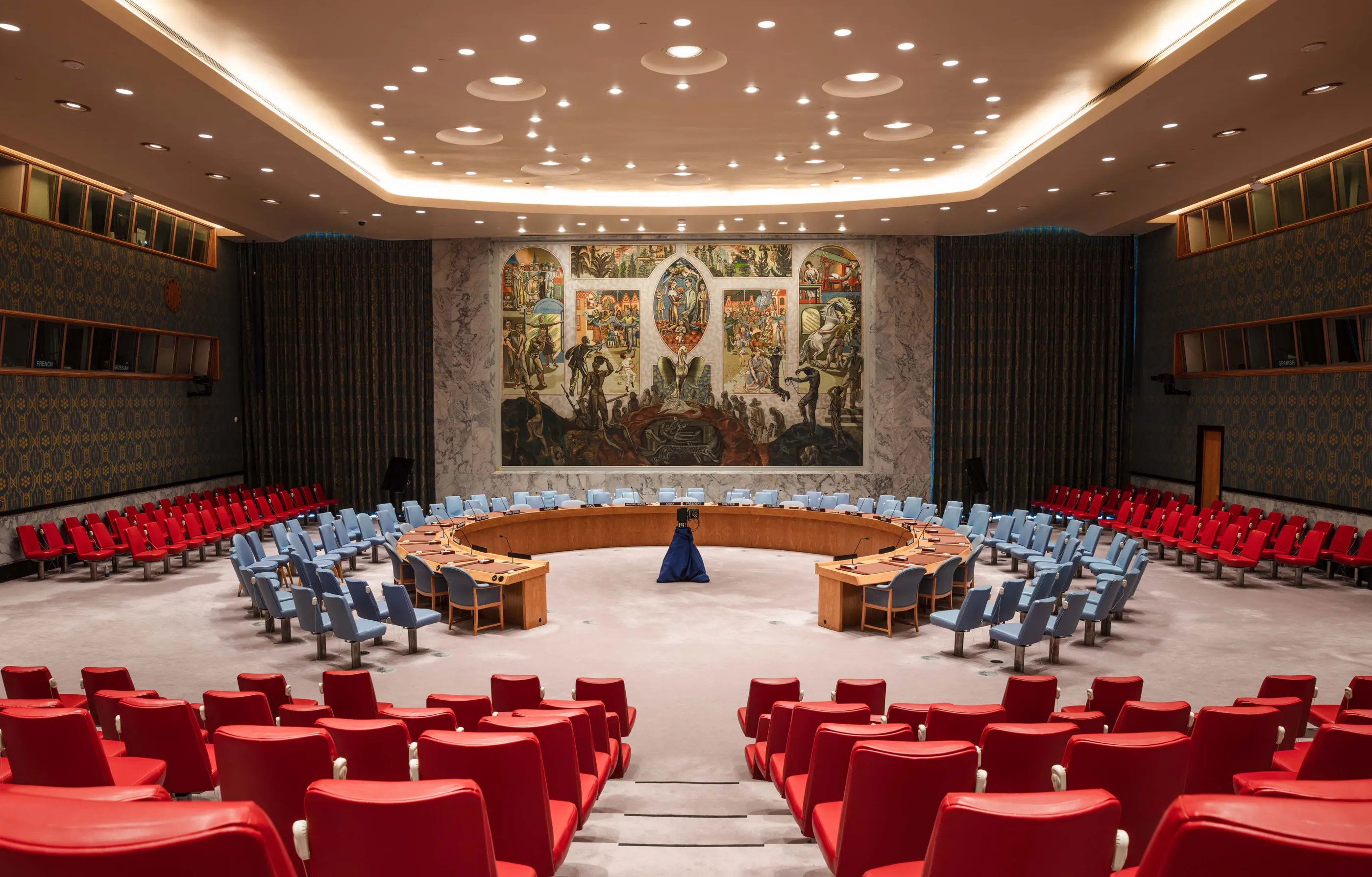
Image: Wiki
Key Takeaways
- Sam Altman and Dario Amodei told the UN Security Council that AI is a global security issue, and both conceded that no lab or nation can make it safe alone.
- Societies have always absorbed transformative technologies through learning as well as law, and the evolutional events we are witnessing now compress that process into a single school career.
- I propose three places to start now: teach authority before tools, give teachers the power to refuse, and grade judgment rather than output.
Key Takeaways
- Sam Altman and Dario Amodei told the UN Security Council that AI is a global security issue, and both conceded that no lab or nation can make it safe alone.
- Societies have always absorbed transformative technologies through learning as well as law, and the evolutional events we are witnessing now compress that process into a single school career.
- I propose three places to start now: teach authority before tools, give teachers the power to refuse, and grade judgment rather than output.
At this year's United Nations Security Council meeting on artificial intelligence, the two men most responsible for how fast the technology arrives addressed a body created to prevent wars and asked it for help, Altman in the chamber and Amodei by video. Sam Altman warned that "we could lose control of the future to AI," while Dario Amodei called it a "global security issue," one that "if managed poorly" could "be a risk to humanity as a whole."
I believe them, and that is exactly why I am worried.
My worry is not that their warnings are exaggerated but that, if they are accurate, the institutions responsible for preparing people to live with this technology are the least ready of all. Both men asked the Council for safety standards, verification regimes, and incident reporting, and I support each of them, but safety is a floor, not a house. No resolution can teach a generation of students, teachers, and workers to decide what a machine may do on their behalf, because that is educational work, and it cannot wait for diplomacy to catch up.
Amodei’s remarks are worth watching in full.
What They Conceded
The most revealing passages were not the warnings but the admissions. Altman said that “the most important decisions cannot be made by labs in San Francisco alone. They must be shaped through democratic processes and by governments accountable to the people that they serve,” and Amodei urged the Council to “begin with narrow agreements that every member can support,” because “no leader, no company, and no nation can manage this alone.”
Amodei also pledged that his company “will slow down as much as necessary,” yet one lab’s restraint binds neither its competitors nor rival governments, which means two rival chief executives were telling the world, in effect, that competition alone cannot keep us safe. If the builders of these systems concede that the most important decisions belong to the public, then it falls to the rest of us to make sure the public is equipped to make them.
Altman made much the same case in his own remarks to the Council.
How Societies Learn to Live With Their Inventions
History offers a pattern here. The printing press eventually demanded mass literacy, and industrialization gave rise to the public school; in each case, a society absorbed a transformative technology not only through its laws but through its learning. John Dewey (1916) described education as the means by which a society renews itself, and every great technological shift has tested that capacity in its own way.
The evolutional events we are witnessing now are testing it faster than ever before, because where earlier transitions unfolded across generations, this one may unfold within a single school career. UNESCO urged governments in 2023 to keep human agency at the center of generative AI in education (Miao & Holmes, 2023), and yet the speeches at the Council suggest that this call has still not reached the rooms where AI’s future is being negotiated.
What Schools Can Begin Now
If Amodei’s estimate of “one or two years” proves right, I would begin in three places.
Teach authority before tools. Gleb Tsipursky, writing in these pages, calls this authority literacy: the habit of asking what a system may access, what it may decide, and what it may do without permission. I would want every secondary student to practice drawing those lines well before anyone hands them an agent that acts in their name.
Give teachers the power to refuse. No school should adopt an AI system that its teachers cannot inspect, pause, or override, because procurement is itself a form of governance, and it too often happens without the educators who will live with its consequences.
Assess judgment, not just output. If we reward only a polished essay, students will quite reasonably learn to delegate the essay, so we should also assess what they asked the machine to do, what they verified, and what they chose not to hand over.
Who Was Missing From the Room
The sharpest criticism of their appearance at the Council is that the companies creating the risk are now helping to write the rules meant to contain it, and I share that concern. It is one reason I value education as a form of governance, since it lives in millions of classrooms rather than in a single negotiating room and is far harder for any lab to capture.
It is also the form of governance most likely to go unfunded. Fifteen nations sit on the Security Council, yet the students who will live longest with these decisions, many of them in under-resourced schools across the Global South, had no seat in that chamber, and their teachers deserve to be prepared first rather than last.
Why I Am Worried, and Still Hopeful
Altman spoke of a possible “new renaissance,” and I hope he is right, but renaissances are not declared in diplomatic chambers; they are built by people who have learned to think alongside powerful tools without surrendering their judgment to them.
Safety is the floor, and education is the load-bearing wall. The Security Council can lay the first, but the rest of us must begin raising the second, and we must begin now.
References
C-SPAN. (2026, September 23). Anthropic CEO Amodei warns UN Security Council on AI risks [Video]. YouTube. https://www.youtube.com/watch?v=u-u8gOgNA9o
C-SPAN. (2026, September 23). OpenAI CEO Sam Altman warns UN Security Council on AI risks [Video]. YouTube. https://www.youtube.com/watch?v=bT-LB6MCb8E
Dewey, J. (1916). Democracy and education: An introduction to the philosophy of education. Macmillan.
Miao, F., & Holmes, W. (2023). Guidance for generative AI in education and research. UNESCO. https://doi.org/10.54675/EWZM9535
Tsipursky, G. (2026, September 16). AI education needs authority literacy before agent literacy. Society and AI. https://societyandai.org/perspectives/ai-education-needs-authority-literacy/
Cite this article
Gattupalli, S. (2026). I believe Altman and Amodei. That’s why I’m worried. Society and AI. https://societyandai.org/opinion/un-ai-safety-right-angle-turn/
Write for Society & AI
We welcome contributions from educators, researchers, librarians, policymakers, and practitioners examining the intersection of artificial intelligence, education, and society. All work published on Society & AI is made available free of cost and in open access, in service of education and the public good. Write to us at [email protected].