Mini Games
Mini Games about how the world is being sorted.
Word games and puzzles built around the ideas that decide things. How systems classify people, what a threshold really is, who gets to appeal. Each takes about five minutes.
Every game draws from a bank of hand-written puzzles and rotates through it, so opening the same game twice does not hand you the same problem. Each round closes with a short note on what the puzzle was actually about.
 Word game
Ages 12+
Word game
Ages 12+
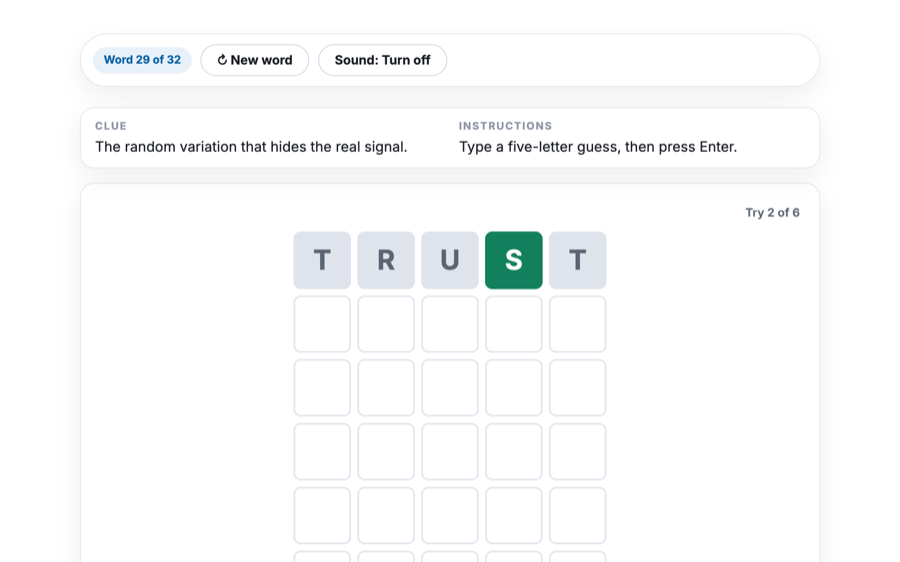
Concept Guess
A five-letter term, six attempts, and a clue that never leaves the screen. Solve it and find out why the word matters.
- Core vocabulary
- Labels & thresholds
- Civic language
 Word game
Ages 13+
Word game
Ages 13+
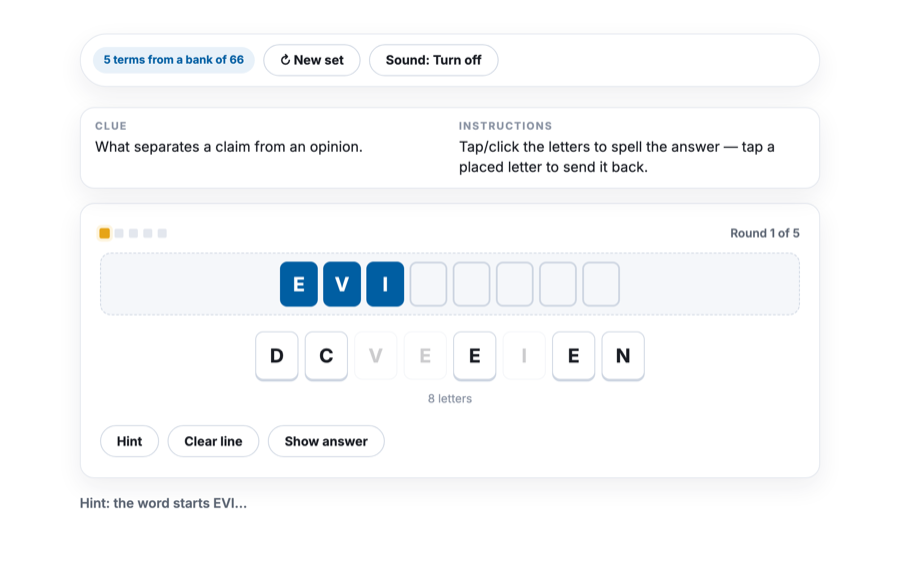
Word Untangle
Anagrams of the words that matter: consent, provenance, threshold, oversight. Rebuild each one from its scrambled letters.
- Consent & privacy
- Accountability
- Hidden labour
 Puzzle
Ages 13+
Puzzle
Ages 13+
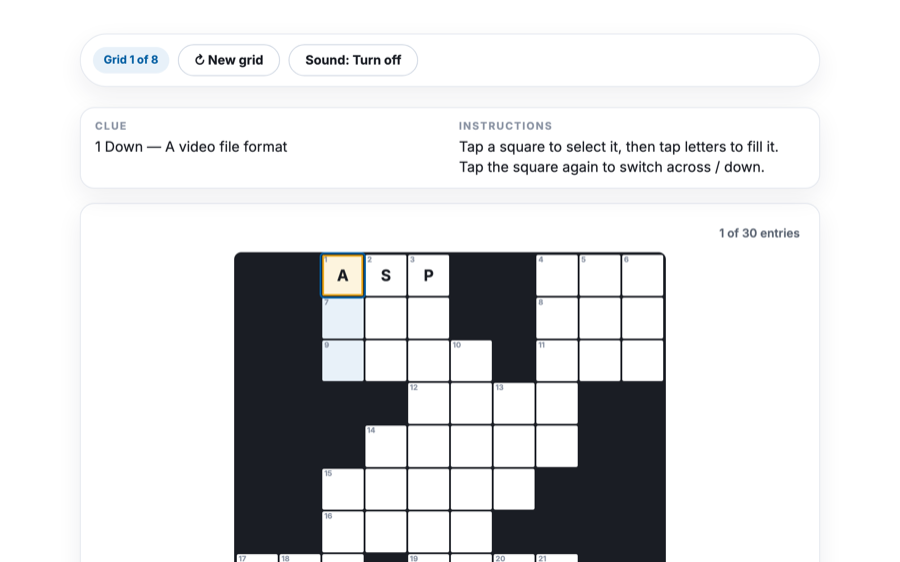
Mini Crossword
A randomized ten-by-ten grid built from the vocabulary of classrooms, media, and automated decisions. Every crossing is a constraint you can lean on.
- Cross-checking claims
- Classroom vocabulary
- Media & decisions
Ages 5–8
Games for early graders.
Before a child can question a system, they need the idea that a system is even there. These two are wordless enough for a five-year-old: tap, drag, and watch a machine learn to sort and to guess. No reading level required, and no losing.
 Early learners
Ages 5–8
Early learners
Ages 5–8
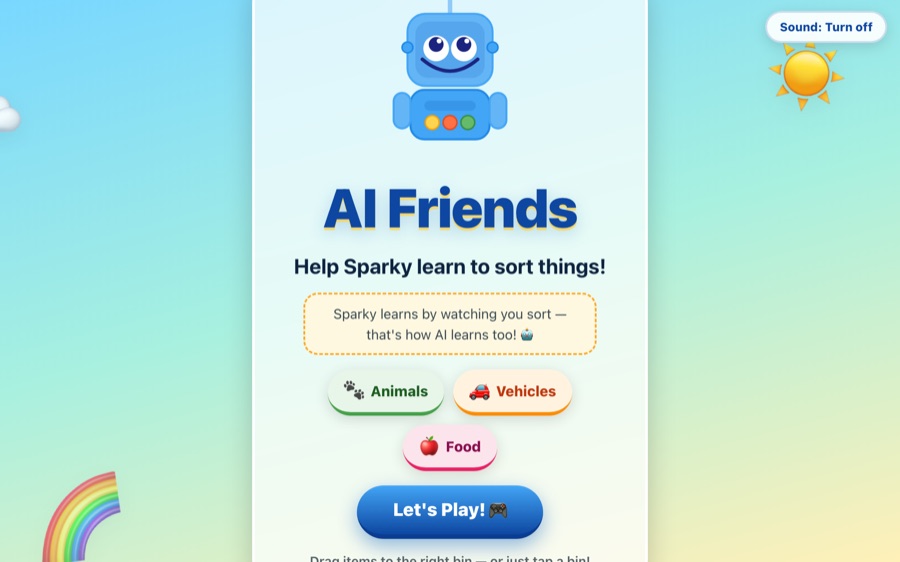
AI Friends
Help Sparky Sort!Sparky needs help sorting animals, vehicles, and food. Every choice shows how a machine learns to put things in boxes.
- Classification
- Labels & examples
- Sorting by feature
 Early learners
Ages 5–8
Early learners
Ages 5–8
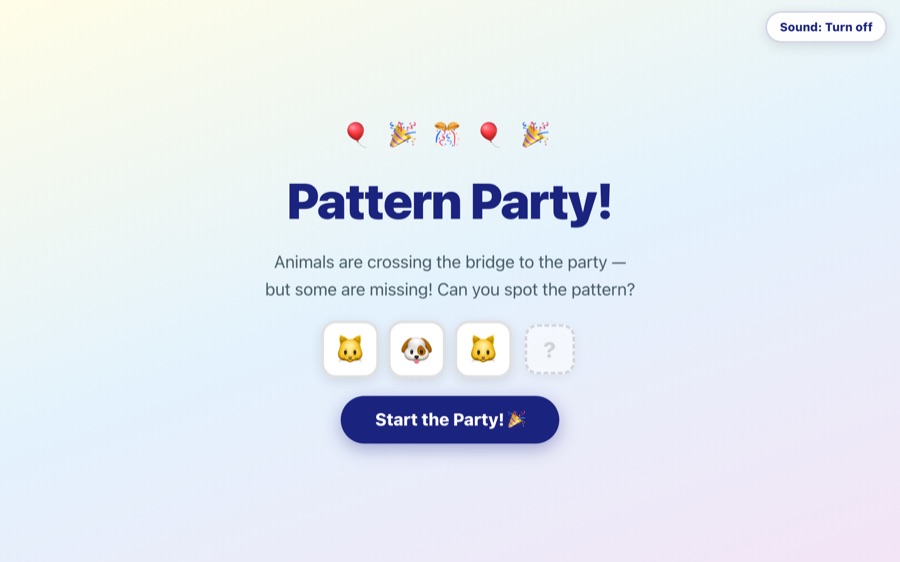
Pattern Party
Spot the Pattern!Finish the sequence and watch a machine guess what comes next. The first idea behind every prediction.
- Pattern recognition
- Prediction
- What stays the same
Why we start with games.
Because a game is the only medium that makes you commit to an answer, be wrong in a way nobody sees, and try again — that is how understanding actually arrives.
- Game-based learning. Each game asks for a decision before the answer, so players practise thinking and recover from wrong turns — the same loop that makes new ideas stick.
- Vocabulary building. Terms like classification, prediction, and threshold appear in context, so learners build a working vocabulary through use rather than memorisation.
- Reading. Prompts and feedback are short and clearly written, giving developing readers a reason to read and a reward for getting it right.